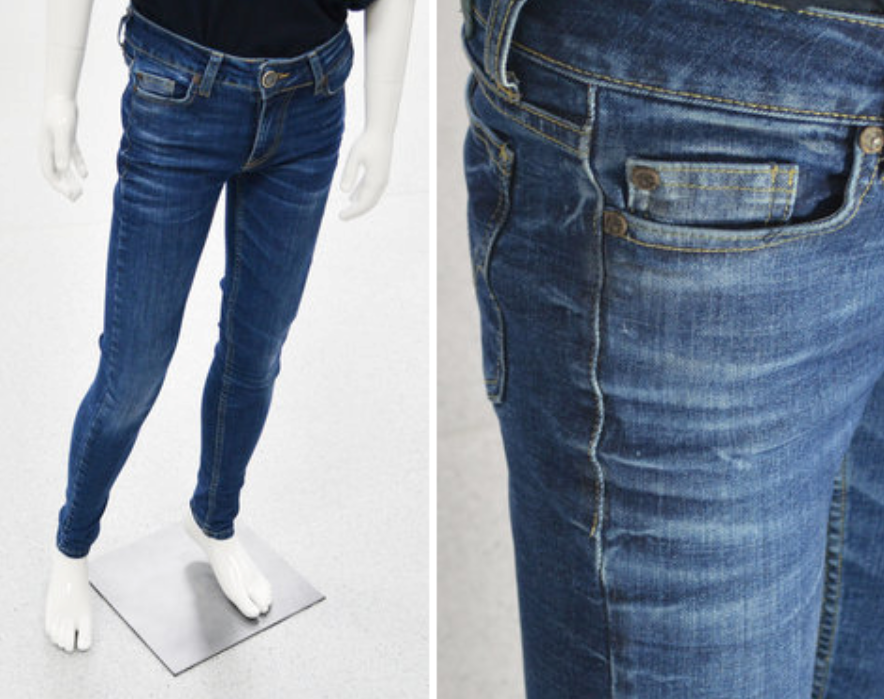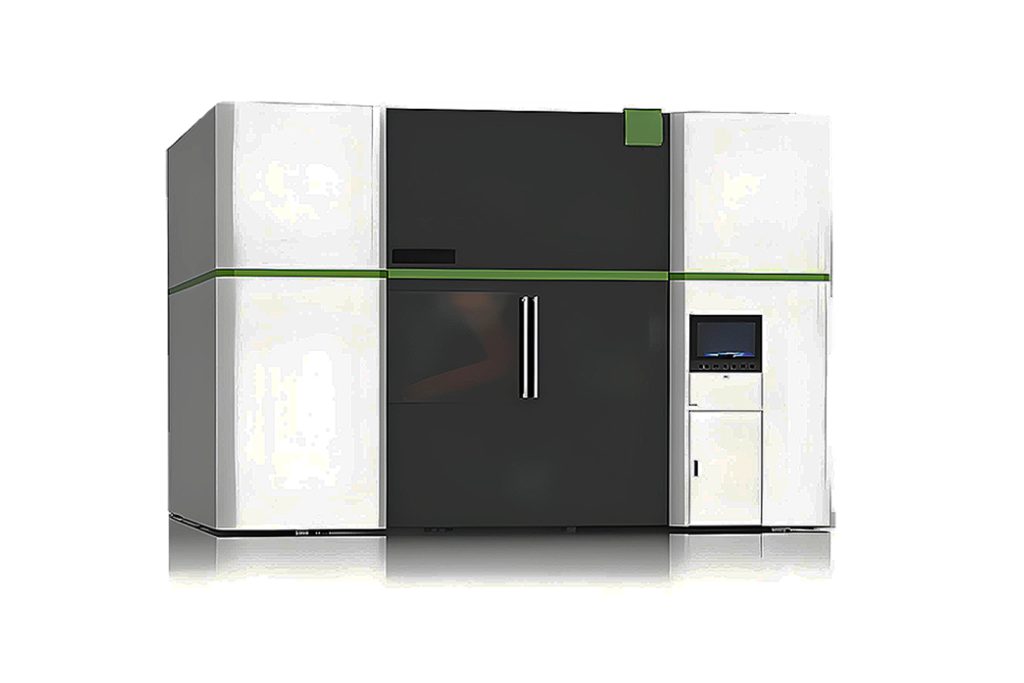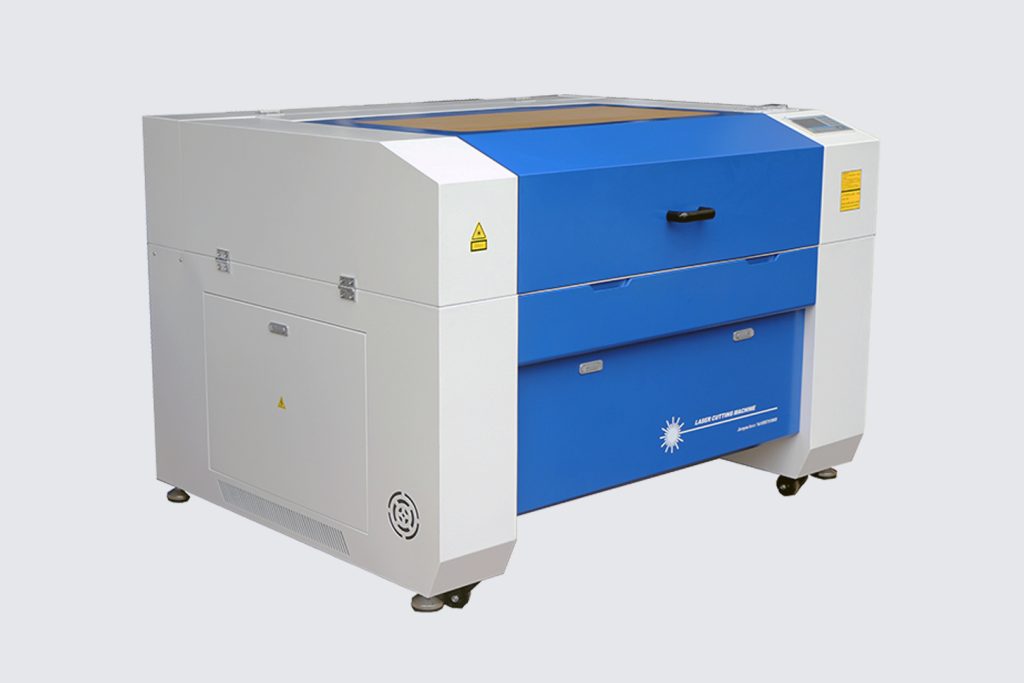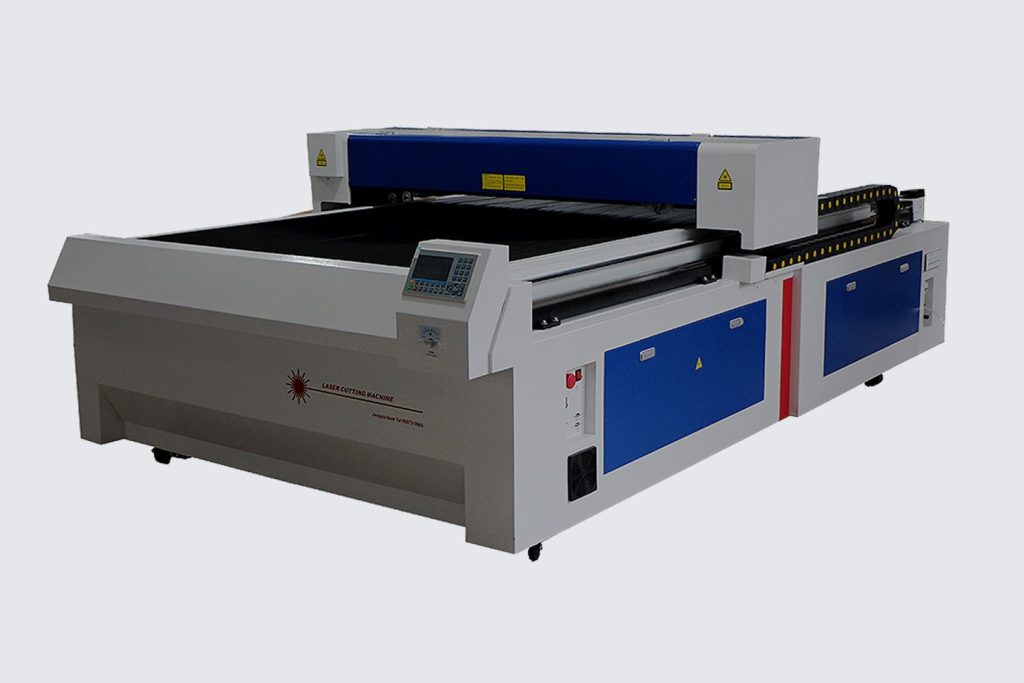
In the denim industry, the move from manual labor to digital precision isn’t just about speed—it’s about survival in a market that demands both “distressed” aesthetics and eco-friendly ethics. The adoption of a small laser cutting machine for non-metallic materials has transformed how boutique designers and larger labels handle finishing.
By replacing harsh chemicals and abrasive stones with a focused beam of light, these machines offer a level of control that was previously impossible to achieve.
1. Precision Without Compromising Fiber Strength
Traditional “whiskering” and manual sanding often weaken the denim fabric, leading to premature tearing. However, when you utilize a small laser cutting machine for non-metallic materials, the laser beam targets only the indigo dye through a process called sublimation (turning the solid dye into gas).
- Ablation Control: You can precisely “shave” off layers of indigo to create highlights without hurting the white cotton core.
- Consistency: Unlike a tired worker at the end of a shift, the laser executes the exact same pixel-perfect pattern on the 100th pair of jeans as it did on the first.
2. The “Waterless” Revolution
One of the most significant advantages of the small laser cutting machine for non-metallic materials is its impact on sustainability. The traditional denim “wash” is notoriously thirsty and toxic.
- Chemical-Free: Lasers eliminate the need for Potassium Permanganate (PP) spray—a hazardous chemical used to create bright white fades.
- Dry Finishing: Because the laser creates the faded look “dry,” the number of subsequent wash cycles is drastically reduced, saving thousands of gallons of water per production run.
3. High-Resolution Artistic Freedom
Traditional tools are blunt instruments; a laser is a fine-tipped pen. Designers are no longer limited to basic fades and tears.
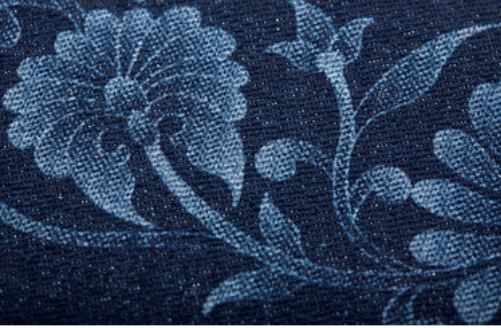
- Complex Graphics: You can etch high-resolution photos, intricate lace patterns, or geometric motifs directly into the thigh or back pockets.
- Micro-Perforations: A small laser cutting machine for non-metallic materials can create breathable “ventilation” zones or decorative “distressed” holes with sealed edges that won’t fray uncontrollably.
Comparison: Traditional vs. Laser Finishing
| Feature | Traditional Methods (Sanding/Stone/PP) | Small Laser Machine |
| Sustainability | High chemical and water usage | Zero chemicals; minimal water |
| Speed | 10–15 minutes per garment | 30–90 seconds per garment |
| Health & Safety | Risk of silicosis/chemical exposure | Enclosed, safe, filtered fumes |
| Design Flexibility | Limited to standard “wear” looks | Infinite digital patterns |
4. Agility for Boutique and “Small-Batch” Labels
For local ateliers or start-ups, the barrier to entry for denim production used to be the high cost of industrial wash houses. The small laser cutting machine for non-metallic materials acts as a “miniature factory” on a desktop.
- Rapid Prototyping: Change a design in a software file and see the result in seconds.
- On-Demand Customization: Offer customers the ability to have their names or custom designs etched onto their jeans while they wait.
Technical Note: For denim, a CO2-based laser is the industry standard. Since denim is organic (cotton), it absorbs the $10.6 \mu m$ wavelength of a CO2 laser perfectly, ensuring clean marks without scorching the surrounding fabric.
In summary, the small laser cutting machine for non-metallic materials is the bridge between vintage heritage and modern technology. It allows brands to produce the “worn-in” look consumers love while respecting the planet and the people making the clothes.