What are the typical maintenance requirements for a fiber laser cutting machine?While fiber lasers are famous for being “low maintenance” compared to CO₂ systems, they are not “no maintenance.”
Neglecting a few critical areas can lead to expensive repairs, particularly to the cutting head and fiber cable.
Here is a typical maintenance schedule to keep a fiber laser running at peak performance.
1. Daily Maintenance (Operator Level)
These tasks should be performed at the start or end of every shift.
- Inspect the Protective Lens (Cover Slide):
- Task: Check the protective glass at the bottom of the cutting head. It is the only barrier between the cutting sparks and your expensive laser optics.
- Action: If it has spots or burns, clean it or replace it immediately. Never operate with a damaged cover slide.
- Check the Nozzle:
- Task: Inspect the copper nozzle tip for damage or spatter buildup.
- Action: Clean off spatter or replace if the circle is out of round. A bad nozzle ruins gas flow and cut quality.
- Clean the Machine Bed:
- Check Gas Pressures: Ensure assist gas (Oxygen/Nitrogen) and compressed air pressures are within spec.
2. Weekly Maintenance
- Clean the Chiller Filters:
- Task: Pull out the air filters on the water chiller unit and vacuum/wash them.
- Why: A clogged filter causes the chiller to overheat, which will shut down the laser source to protect itself.
- Check Chiller Water Level: Top up with distilled water if low.
- Lubricate Motion System:
- Task: Check the grease reservoirs for the rack-and-pinion drive system (X, Y, and Z axes). Most modern machines have auto-lubrication, so just ensure the container isn’t empty.
- Clean the Area: Wipe down the machine exterior and control cabinet to prevent conductive dust from entering electrical components.
3. Monthly / Quarterly Maintenance
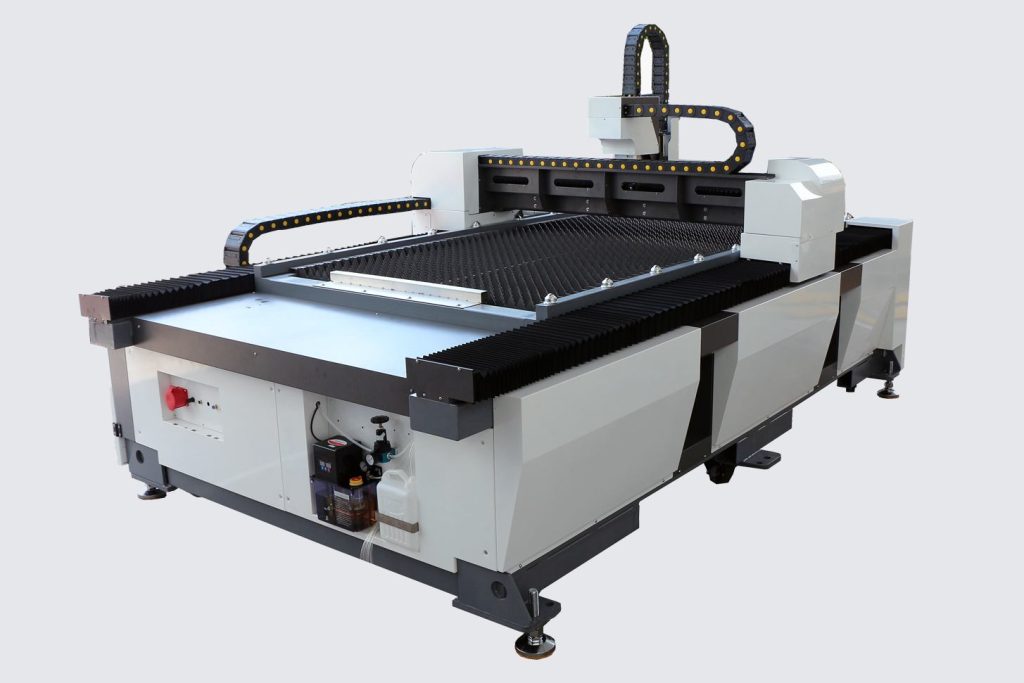
- Inspect Bellows (Way Covers): Check for holes or tears in the accordion-style covers that protect the rails. Laser dust is extremely abrasive and can destroy linear guides if it gets inside.
- Check Electrical Cabinet: Ensure cooling fans are running and filters are clean. Heat is the enemy of the sensitive servo drives inside.
- Alignment Check: perform a quick “tape shot” or nozzle centering test to ensure the laser beam is perfectly centered in the nozzle.
4. Annual Maintenance (Professional Service)
It is highly recommended to have a certified technician perform a yearly checkup:
- Replace Chiller Water: Drain and refill the chiller with fresh distilled water and additives (biocide/corrosion inhibitor) to prevent algae or rust inside the laser source.
- Geometry Check: Verify the machine is still square and level.
- Proactive Replacement: Replace internal filters or sensors that are nearing their end of life.
Critical Warning: The “Fiber Cable”
The most expensive component is the fiber delivery cable (the yellow or orange cable running to the cutting head).
- Never step on it, bend it sharply, or drop heavy objects on it.
- Never disconnect it yourself unless trained. Dust entering the connection point can instantly destroy the laser source when you turn it back on.