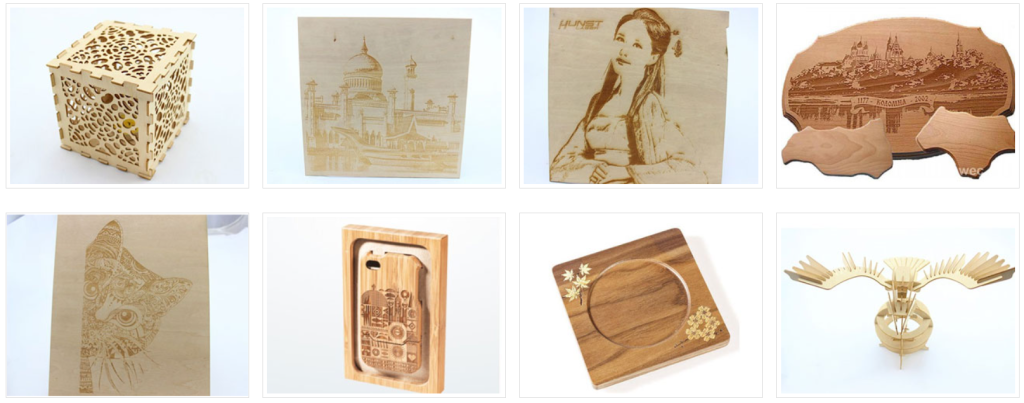
Laser Cutting Wood summary
Laser cutting wood is a precise and versatile manufacturing process that uses a focused laser beam to cut, engrave, or mark wood.
This technology has become increasingly popular in woodworking and various other industries for its ability to create intricate designs with high accuracy and speed.
How It Works
A high-powered laser beam, typically from a CO2 laser, is directed onto the surface of the wood.
The intense heat from the laser vaporizes the wood along a computer-guided path, creating a clean and precise cut.
This non-contact process minimizes the risk of splintering or damaging the wood and often results in a smooth, sealed edge that requires no further finishing.
The process is controlled by a computer, allowing for the precise execution of complex digital designs.
Advantages of Laser Cutting Wood
Laser cutting offers numerous benefits over traditional woodworking methods:
Precision and Accuracy: Lasers can cut intricate and complex designs with a very high degree of precision, which is difficult to achieve with conventional tools.
Speed and Efficiency: The automated nature of laser cutting significantly reduces production time compared to manual methods.
Versatility: Laser cutters can work with a wide range of wood types and thicknesses, and can be used for both cutting and engraving.
Clean and Sealed Edges: The heat from the laser seals the cut edges of the wood, preventing fraying and resulting in a clean finish.
Minimal Waste: The high precision of laser cutting allows for efficient use of materials, reducing waste.
Eco-Friendly: Compared to some traditional methods, laser cutting produces fewer emissions and doesn’t require the use of harsh chemicals.
Types of Wood for Laser Cutting
A variety of woods can be used for laser cutting, each with its own unique properties:
Wood Type
Characteristics
Hardwoods
Woods like oak, cherry, and maple are dense and provide clean, smooth cuts and crisp engravings.
Softwoods
Woods such as pine and cedar are generally less expensive but can be more prone to charring due to their lower density.
Plywood
Materials like birch and bamboo plywood are popular choices due to their strength, stability, and consistent thickness.
MDF (Medium-Density Fiberboard)
This engineered wood has a uniform surface that is ideal for detailed cuts and engraving.
Applications
The applications of laser cutting wood are vast and varied, including:
Furniture and Interior Design: Creating custom furniture, decorative panels, and intricate inlays.
Signage and Decorative Items: Producing detailed signs, and personalized decorative pieces.
Prototyping and Model Making: Quickly creating detailed models and prototypes for architectural or product design.
Art and Jewelry: Crafting intricate wooden jewelry, sculptures, and other artistic creations.
Industrial Applications: Manufacturing precise components for various industries.
This technology has become increasingly popular in woodworking and various other industries for its ability to create intricate designs with high accuracy and speed.
How It Works
A high-powered laser beam, typically from a CO2 laser, is directed onto the surface of the wood.
The intense heat from the laser vaporizes the wood along a computer-guided path, creating a clean and precise cut.
This non-contact process minimizes the risk of splintering or damaging the wood and often results in a smooth, sealed edge that requires no further finishing.
The process is controlled by a computer, allowing for the precise execution of complex digital designs.
Advantages of Laser Cutting Wood
Laser cutting offers numerous benefits over traditional woodworking methods:
Precision and Accuracy: Lasers can cut intricate and complex designs with a very high degree of precision, which is difficult to achieve with conventional tools.
Speed and Efficiency: The automated nature of laser cutting significantly reduces production time compared to manual methods.
Versatility: Laser cutters can work with a wide range of wood types and thicknesses, and can be used for both cutting and engraving.
Clean and Sealed Edges: The heat from the laser seals the cut edges of the wood, preventing fraying and resulting in a clean finish.
Minimal Waste: The high precision of laser cutting allows for efficient use of materials, reducing waste.
Eco-Friendly: Compared to some traditional methods, laser cutting produces fewer emissions and doesn’t require the use of harsh chemicals.
Types of Wood for Laser Cutting
A variety of woods can be used for laser cutting, each with its own unique properties:
Wood Type
Characteristics
Hardwoods
Woods like oak, cherry, and maple are dense and provide clean, smooth cuts and crisp engravings.
Softwoods
Woods such as pine and cedar are generally less expensive but can be more prone to charring due to their lower density.
Plywood
Materials like birch and bamboo plywood are popular choices due to their strength, stability, and consistent thickness.
MDF (Medium-Density Fiberboard)
This engineered wood has a uniform surface that is ideal for detailed cuts and engraving.
Applications
The applications of laser cutting wood are vast and varied, including:
Furniture and Interior Design: Creating custom furniture, decorative panels, and intricate inlays.
Signage and Decorative Items: Producing detailed signs, and personalized decorative pieces.
Prototyping and Model Making: Quickly creating detailed models and prototypes for architectural or product design.
Art and Jewelry: Crafting intricate wooden jewelry, sculptures, and other artistic creations.
Industrial Applications: Manufacturing precise components for various industries.
SAMPLES