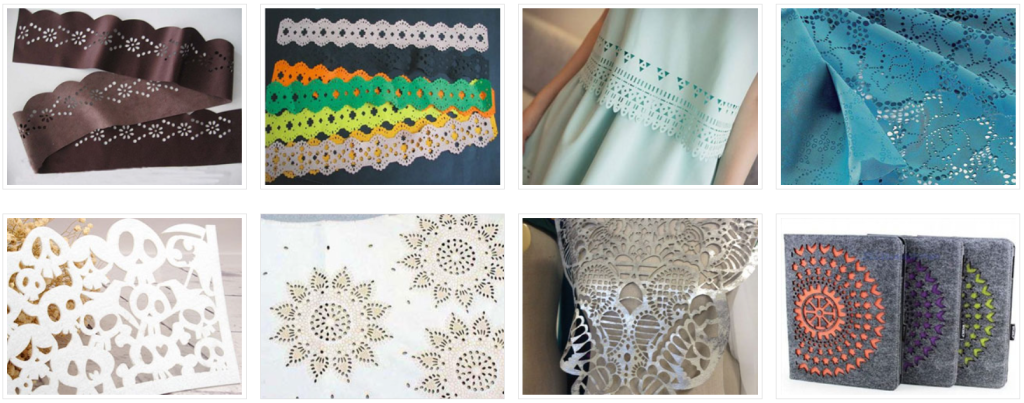
Laser Cutting Fabric
Laser cutting has revolutionized the fabric and textile industry, offering a precise, fast, and versatile alternative to traditional cutting methods.
This technology utilizes a focused laser beam to cut or engrave materials with exceptional accuracy, making it ideal for everything from tough denim to delicate silk.
How It Works
The process of laser cutting fabric involves a high-powered laser beam, guided by computer software, that melts, burns, or vaporizes the material along a designated path.
This non-contact method ensures that the fabric is not distorted or damaged during cutting.
A key advantage of laser cutting is that the heat from the laser seals the edges of the fabric, preventing fraying and eliminating the need for further finishing.
Advantages Over Traditional Methods
Compared to traditional methods like scissors, rotary cutters, and die-cutting, laser cutting offers several significant benefits:
Feature
Laser Cutting
Traditional Methods
Precision
Exceptional accuracy, allowing for intricate and complex designs.
Relies on operator skill, leading to potential inconsistencies.
Speed
Significantly faster, increasing production efficiency.
Slower, especially for detailed or large-scale projects.
Versatility
Can be used on a wide variety of natural and synthetic fabrics with minimal adjustments.
May require different tools for different fabrics.
Material Waste
Optimizes fabric usage through precise pattern nesting, reducing waste.
Often results in higher material waste due to less precise cutting.
Edge Finish
Creates sealed edges that prevent fraying.
Often requires additional finishing to prevent fraying.
Contact
Non-contact process that doesn’t distort the fabric.
Physical contact can cause stretching or damage.
Types of Lasers Used
Different types of lasers are suitable for cutting various fabrics:
CO2 Lasers: The most common choice for fabric cutting, CO2 lasers are effective on a wide range of materials, including cotton, silk, polyester, and linen.
Fiber Lasers: These are particularly effective for synthetic fabrics like polyester and fleece, offering fast and accurate cuts.
UV Lasers: Ideal for delicate and heat-sensitive materials like silk and lace, as they generate minimal heat and reduce the risk of damage.
Suitable Fabrics
A wide variety of fabrics can be successfully laser cut, including:
Natural Fibers: Cotton, silk, wool, linen, and denim.
Synthetic Fibers: Polyester, fleece, felt, and nylon.
Blends: Poly/cotton blends and canvas.
It’s important to note that some materials, such as PVC and vinyl, should not be laser cut as they can release toxic fumes.
Applications
The applications for laser-cut fabrics are extensive and continue to grow:
Fashion: Creating intricate designs, patterns, and embellishments for clothing and accessories.
Home Furnishings: Producing custom blankets, pillows, and upholstery.
Industrial Applications: Cutting materials for automotive interiors, filters, and conductive fabric sensors.
Prototyping: Quickly and easily creating prototypes and custom designs.
Engraving: Adding logos, patterns, and other designs to fabrics like denim, leather, and fleece.
This technology utilizes a focused laser beam to cut or engrave materials with exceptional accuracy, making it ideal for everything from tough denim to delicate silk.
How It Works
The process of laser cutting fabric involves a high-powered laser beam, guided by computer software, that melts, burns, or vaporizes the material along a designated path.
This non-contact method ensures that the fabric is not distorted or damaged during cutting.
A key advantage of laser cutting is that the heat from the laser seals the edges of the fabric, preventing fraying and eliminating the need for further finishing.
Advantages Over Traditional Methods
Compared to traditional methods like scissors, rotary cutters, and die-cutting, laser cutting offers several significant benefits:
Feature
Laser Cutting
Traditional Methods
Precision
Exceptional accuracy, allowing for intricate and complex designs.
Relies on operator skill, leading to potential inconsistencies.
Speed
Significantly faster, increasing production efficiency.
Slower, especially for detailed or large-scale projects.
Versatility
Can be used on a wide variety of natural and synthetic fabrics with minimal adjustments.
May require different tools for different fabrics.
Material Waste
Optimizes fabric usage through precise pattern nesting, reducing waste.
Often results in higher material waste due to less precise cutting.
Edge Finish
Creates sealed edges that prevent fraying.
Often requires additional finishing to prevent fraying.
Contact
Non-contact process that doesn’t distort the fabric.
Physical contact can cause stretching or damage.
Types of Lasers Used
Different types of lasers are suitable for cutting various fabrics:
CO2 Lasers: The most common choice for fabric cutting, CO2 lasers are effective on a wide range of materials, including cotton, silk, polyester, and linen.
Fiber Lasers: These are particularly effective for synthetic fabrics like polyester and fleece, offering fast and accurate cuts.
UV Lasers: Ideal for delicate and heat-sensitive materials like silk and lace, as they generate minimal heat and reduce the risk of damage.
Suitable Fabrics
A wide variety of fabrics can be successfully laser cut, including:
Natural Fibers: Cotton, silk, wool, linen, and denim.
Synthetic Fibers: Polyester, fleece, felt, and nylon.
Blends: Poly/cotton blends and canvas.
It’s important to note that some materials, such as PVC and vinyl, should not be laser cut as they can release toxic fumes.
Applications
The applications for laser-cut fabrics are extensive and continue to grow:
Fashion: Creating intricate designs, patterns, and embellishments for clothing and accessories.
Home Furnishings: Producing custom blankets, pillows, and upholstery.
Industrial Applications: Cutting materials for automotive interiors, filters, and conductive fabric sensors.
Prototyping: Quickly and easily creating prototypes and custom designs.
Engraving: Adding logos, patterns, and other designs to fabrics like denim, leather, and fleece.
SAMPLES