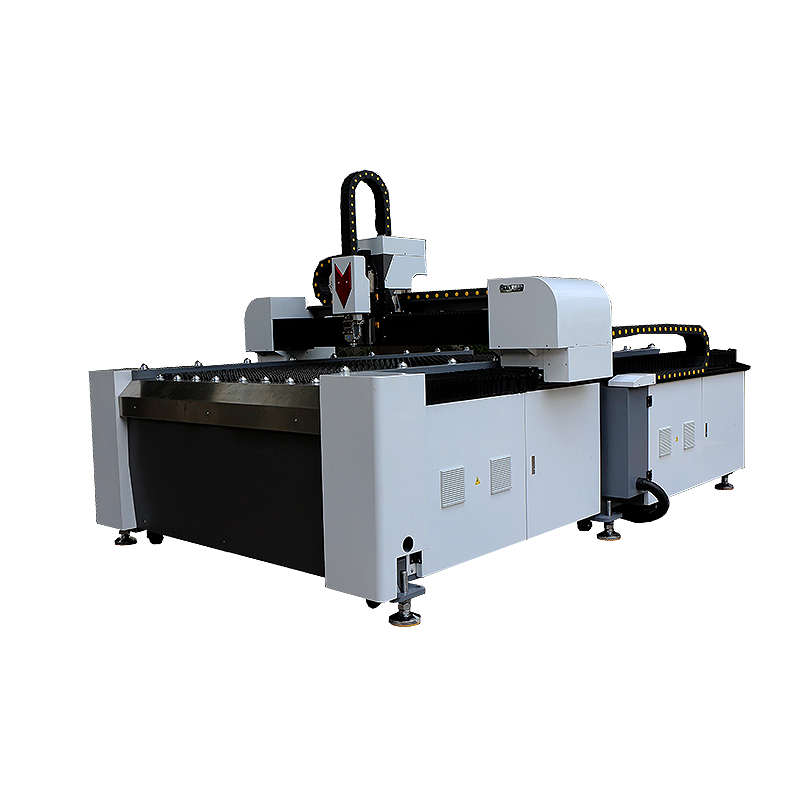
Fiber laser pipe cutting machines have become indispensable in modern manufacturing due to their ability to perform highly precise and efficient cutting on a wide variety of materials. This technology utilizes a focused beam of high-energy light delivered through a fiber optic cable to melt and vaporize the material, resulting in clean, accurate cuts with minimal heat distortion.
The precision of fiber laser cutting stems from several key advantages over traditional methods:
- Exceptional Accuracy: The small spot size of the laser and advanced CNC (Computer Numerical Control) systems allow for micron-level accuracy and the creation of intricate and complex shapes.
- Superior Edge Quality: This method produces smooth, burr-free edges, often eliminating the need for secondary finishing processes.
- Minimal Heat-Affected Zone: The localized heat input reduces the risk of thermal deformation and stress on the material.
- Non-Contact Cutting: As the laser does not physically touch the material, there is no mechanical stress or tool wear.
- High Repeatability: CNC programming ensures that every part is cut to the exact same specifications, which is crucial for batch processing and mass production.
Key Applications in Precision Pipe Cutting
The versatility and precision of fiber laser pipe cutting have led to its adoption across numerous industries for a variety of applications.
Medical Device Manufacturing 🩺
The medical field demands the highest levels of precision and cleanliness, making fiber laser cutting an ideal solution.
- Surgical Instruments: The technology is used to create intricate features on surgical devices, such as cannulas, shafts for minimally invasive instruments, and components for robotic-assisted surgery.
- Implants and Stents: Fiber lasers are used to cut complex geometries in materials like nitinol and stainless steel for stents and valve frames, where precision is critical for performance.
- Medical Equipment: The manufacturing of hospital beds, wheelchairs, rehabilitation apparatus, and other medical equipment benefits from the high-speed, precise cutting of metal tubes.
Automotive Industry 🚗
The automotive sector relies on fiber laser cutting for both high-volume production and custom applications.
- Exhaust Systems: The technology is widely used to cut pipes and tubes for exhaust systems with high precision.
- Chassis and Frame Components: Fiber lasers are employed to cut high-strength steel tubes for chassis, frames, and dashboard brackets, ensuring the structural integrity and precise assembly of vehicles.
- Custom and Aftermarket Parts: The flexibility of laser cutting allows for the efficient production of custom and aftermarket parts, from decorative trim to performance upgrades.
Aerospace and Defense ✈️
In the aerospace industry, where components must be both lightweight and incredibly strong, fiber laser cutting offers significant advantages.
- Structural Components: It is used to cut tubes and profiles for aircraft structures, hydraulic systems, and turbine components from high-strength alloys.
- Complex Geometries: The ability to cut complex shapes and profiles is essential for manufacturing the sophisticated components required in aerospace applications.
Furniture and Architecture 🛋️
The design flexibility of fiber laser cutting makes it a popular choice for creating modern furniture and architectural elements.
- Furniture Manufacturing: The technology is used to cut tubes for chairs, tables, and frames, enabling the creation of intricate and customized designs.
- Architectural Components: Fiber lasers are used to fabricate metal structures, handrails, fences, and decorative gates with high precision.
Other Industries
- Mechanical Engineering: Used for cutting hydraulic pipes and valves with high precision.
- Jewelry: The fine cutting capabilities are also applied in the creation of intricate jewelry designs.
Fiber laser pipe cutting machines can handle a wide variety of materials, including stainless steel, carbon steel, aluminum, copper, brass, and titanium.
They are also capable of cutting various tube shapes, such as round, square, rectangular, and oval profiles, making them a highly versatile tool in modern manufacturing.