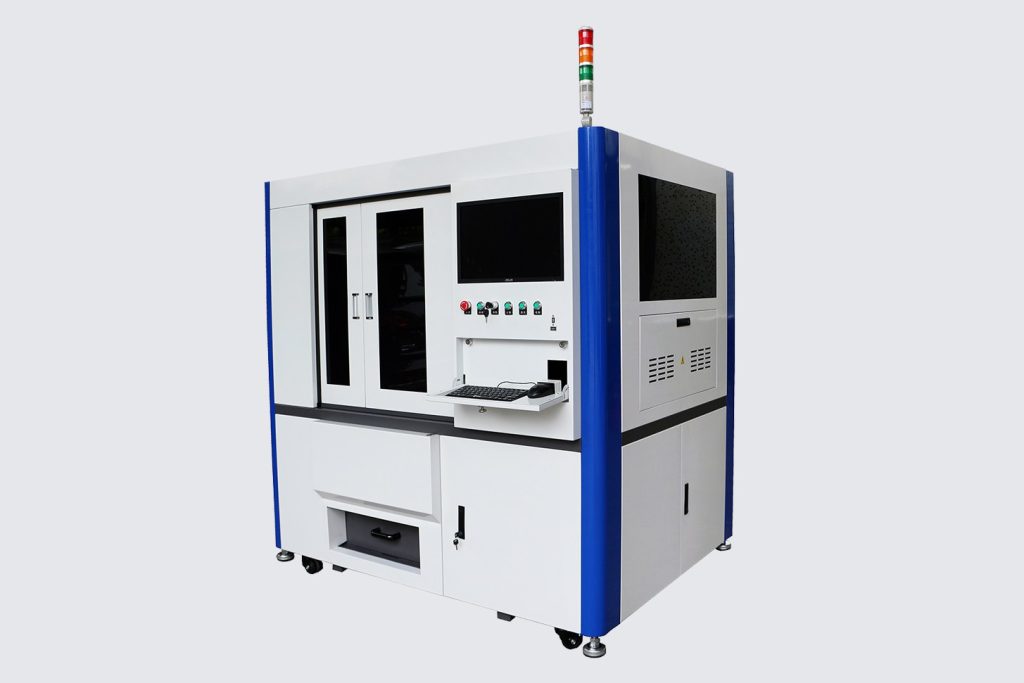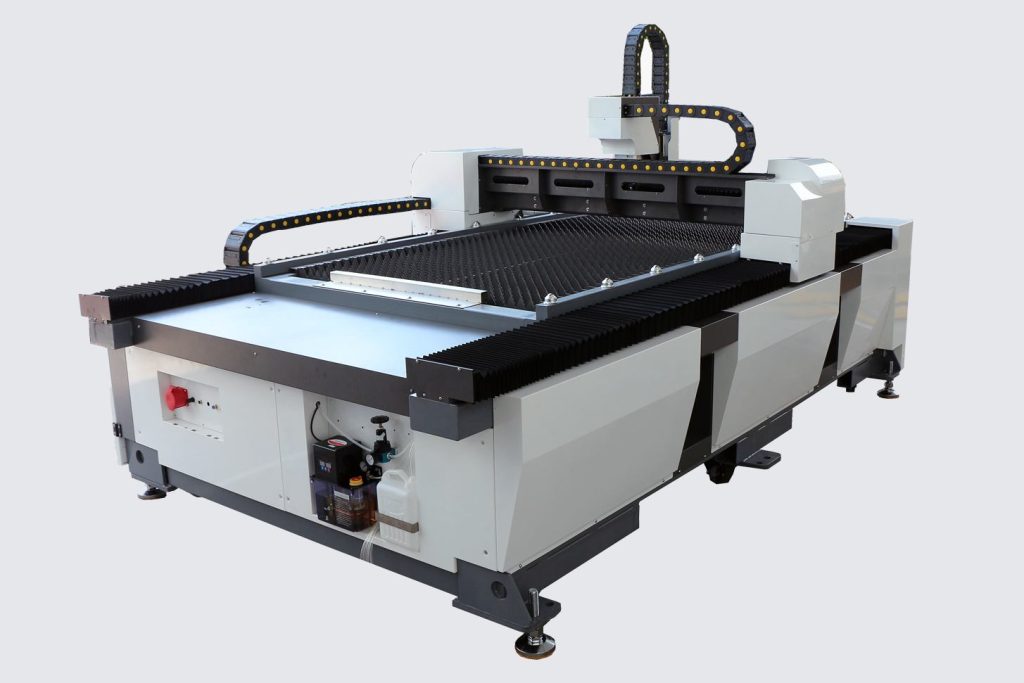
Fiber laser cutting machines are widely considered the standard for modern metal fabrication.1 Their advantages stem from their solid-state design, which uses optical fibers doped with rare-earth elements (like ytterbium) to amplify light, rather than the gas mixtures used in older CO₂ systems.2+1
1. Superior Speed and Efficiency3
Fiber lasers are significantly faster than CO₂ lasers, especially when working with thin to medium-thickness materials.4
- Cutting Speed: For metals under 5mm, fiber lasers can cut 2 to 3 times faster than CO₂ lasers of equivalent power.5
- Wall-Plug Efficiency: Fiber lasers have an electrical conversion efficiency of about 30% to 50%, compared to just 10% to 15% for CO₂ lasers.6 This leads to significantly lower electricity bills for the same output.7+1
2. Processing Reflective Metals8
One of the most distinct technical advantages is the fiber laser’s ability to cut highly reflective materials.9
- Wavelength: Fiber lasers operate at a wavelength of approximately 1.064 10$\mu$m, which is 10 times shorter than CO₂ lasers.11
- Absorption: Because metals absorb this shorter wavelength more readily, fiber lasers can safely cut copper, brass, and aluminum without the risk of “back-reflection” damaging the machine’s internal optics.12
3. Lower Maintenance and Operating Costs13
The architecture of a fiber laser is “solid-state,” meaning the beam is generated and delivered entirely through fiber optic cables.14
- No Mirrors: Unlike CO₂ lasers, which require a complex series of mirrors and bellows that need constant alignment and cleaning, fiber lasers have no moving parts in the light generation path.15
- Longer Lifespan: A typical fiber laser source has a lifespan of roughly 100,000 hours, which is significantly higher than the 20,000 hours often seen with CO₂ gas tubes.
- Reduced Consumables: They require fewer gases and no expensive mirrors, leading to a much lower cost-per-part over the life of the machine.
Summary Comparison: Fiber vs. CO₂
| Feature | Fiber Laser | CO₂ Laser |
| Ideal Material | Metals (including reflective) | Non-metals (Wood, Acrylic, Fabric) |
| Beam Delivery | Fiber Optic Cable (Fixed) | Mirror System (Requires Alignment) |
| Precision | Very High (Smaller Spot Size) | High (But larger Kerf) |
| Maintenance | Low (Minimal moving parts) | High (Frequent cleaning/alignment) |
| Energy Usage | Low (High Efficiency) | High (Lower Efficiency) |
4. Precision and Quality
+2
Because the fiber laser beam can be focused into an incredibly small spot, it creates a very narrow kerf (the width of the cut).16
- Minimal Heat Zone: The concentrated energy results in a smaller Heat-Affected Zone (HAZ), which prevents thermal distortion and warping in delicate parts.17
- Burr-Free Edges: For many materials, the cut quality is so high that secondary finishing or grinding is unnecessary.18
Would you like me to help you calculate the Return on Investment (ROI) for switching from a CO₂ to a Fiber laser based on your current production volume?
Advantages of Fiber Laser Cutting
This video compares CO2 and fiber laser technologies, explaining their distinct advantages and helping viewers choose the right machine for their specific project needs.